
About the Publisher
Pat Case — publisher, author, and curator of this site — has spent decades helping organizations rethink how they operate. Now, driven by a deep‑seated commitment to contributing to a better world, she brings that experience into the broader landscape of global change.
Her work centers on helping people see more clearly through the fog of inherited beliefs, opening space for reimagining what’s possible and for cultivating a more interconnected, peaceful world.

A Worldview Shaped by a Realization of Our Interconnected Nature
My perspective is shaped by insights drawn from many fields — including spirituality, modern science, history, and philosophy — all pointing toward a deeper understanding of our interconnected nature.
When I use the word spiritual, I’m not referring to anything religious, supernatural, or woo‑woo. I’m pointing to something more fundamental: the recognition that we are not simply solid masses of biological matter. We are fields of energy participating in a universe that is, at its core, energetic and relational.
Modern physics shows that what we call “matter” is mostly empty space structured by fields, probabilities, and relationships — a dynamic web of energy that gives rise to the forms we see. Philosophers and wisdom traditions have been pointing to this deeper layer for millennia, each in their own language, describing a reality shaped by relationship, emergence, and interdependence.
Of course, I didn’t come into the world thinking this way. It took years of working in the so‑called “real world,” along with years of reflection, before I arrived at this understanding.
A major catalyst was encountering the work of French Jesuit priest and paleontologist Pierre Teilhard de Chardin, and the transformative quote widely attributed to him:
We are not human beings having a spiritual experience. We are spiritual beings having a human experience.
Pierre Teilhard de Chardin
For me, this was the moment when the pieces of the puzzle I had been contemplating for much of my life finally snapped into place.
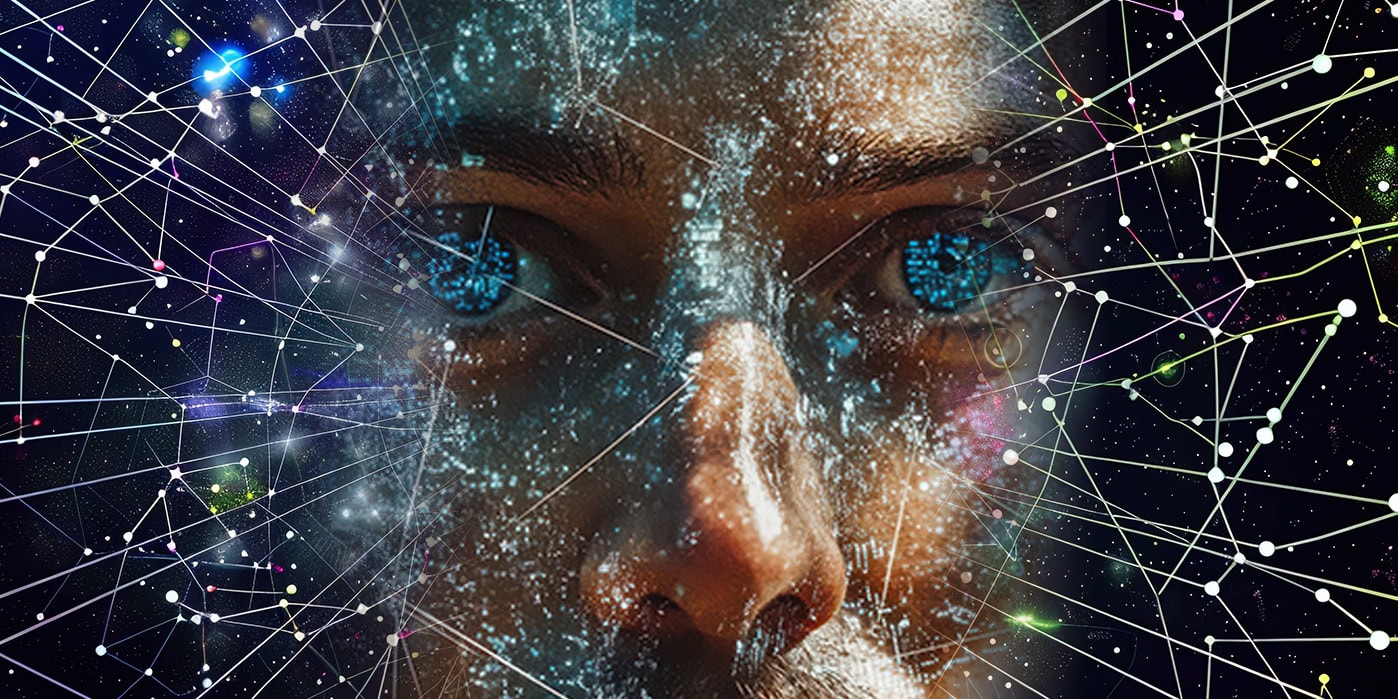
It made me realize that we are all connected through an invisible web — what Hindu and Buddhist traditions call Indra’s Net, an infinite lattice of jewels, each reflecting every other, symbolizing that every part of reality contains and influences the whole.
Historians of ideas have noted similar patterns across cultures, suggesting that this insight has surfaced repeatedly throughout human history. And remarkably, quantum physics now conveys essentially the same view of reality.
Recognizing that reality is not what we once assumed had a profound impact on my life. Since then, I’ve been working to further understand this “rediscovered” worldview — one glimpsed thousands of years ago and echoed in philosophy, science, and spiritual traditions — because I believe it holds the promise of guiding us toward a more interconnected, and therefore more peaceful, way of being.
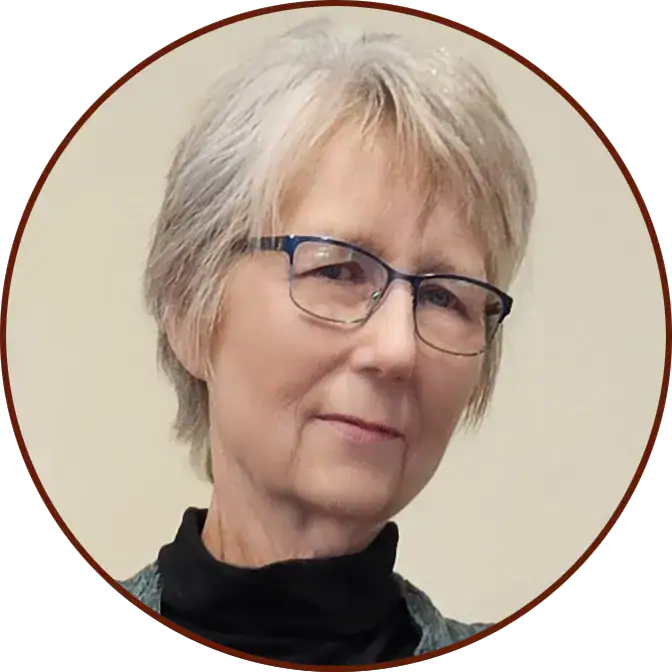
Pat Case
Publisher | Author | Curator
Even as a young person, I often questioned the 'truths' we were taught about how the world works and what we’re expected to believe.
A Career Spent Guiding Transformations
That same questioning nature led me into work that helped organizations examine their assumptions, rethink old patterns, and find new ways of moving forward.
Through years of leading large‑ scale change efforts — often within complex, global corporations — I learned that real transformation isn’t simply a matter of strategy or process. It depends on people: on their readiness to let go of what’s familiar and step into something new.
What I loved most about that work wasn’t the frameworks or the plans. It was the human side of transformation — the moment when people began to see their situation more clearly, or when a team found a new way to improve how they worked together.
Those moments taught me something essential: change doesn’t happen because someone announces it. It happens because people become ready for it.
Over time, I also came to understand that people don’t resist change because they’re stubborn. They resist because change asks them to release something — a belief, a habit, a sense of identity — before they know what will replace it. Successful transformation requires both intellectual understanding and emotional readiness. Without both, change efforts stall.
Looking back, I can see that the work I did throughout my career was preparing me for the kind of transformation I’m focused on now — one that extends far beyond any single organization.
Today, we’re living through a global shift in how we understand ourselves, our systems, and our place in an interconnected reality. Helping people become ready for that shift is, in many ways, the natural continuation of the work I’ve always done.
Through my writing and curation, I aim to spark new ways of seeing, loosen long‑held assumptions, and open space for imagining what a more coherent future might look like.
My work now is a work of passion — an effort to help create new ways of understanding the world and our place within it.